
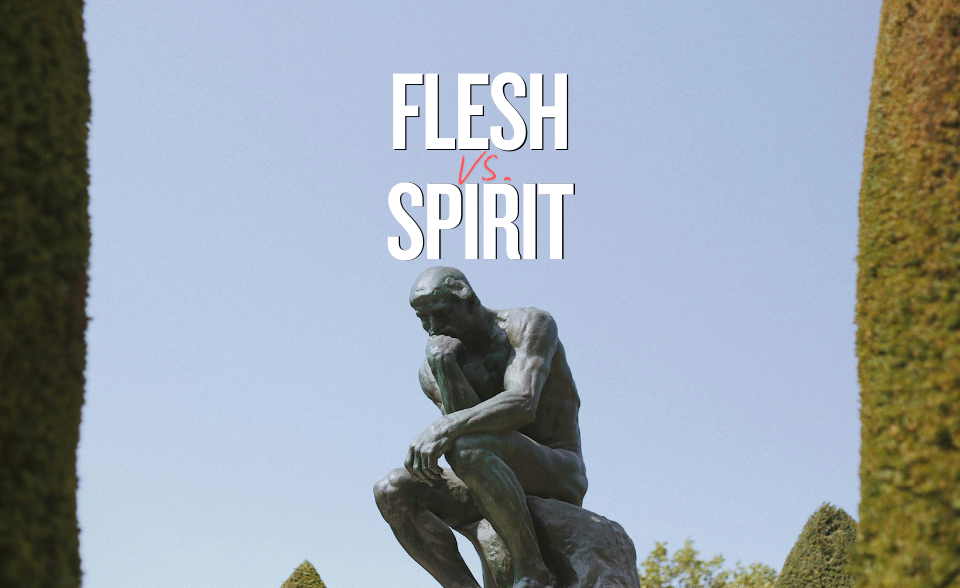
One of the world’s most recognizable sculptures, The Thinker depicts a muscular, nude man hunched in deep thought. You’ve probably seen the image parodied in advertisements and memes as someone overthinking a decision or solving a problem. His right elbow presses into his left knee, while his chin rests on his hand. We wonder what he’s thinking as every muscle, even his furrowed brow, strains with effort. Released in 1904, Auguste Rodin’s work was praised as a symbol of human intellect and reason, and catapulted him to worldwide fame.
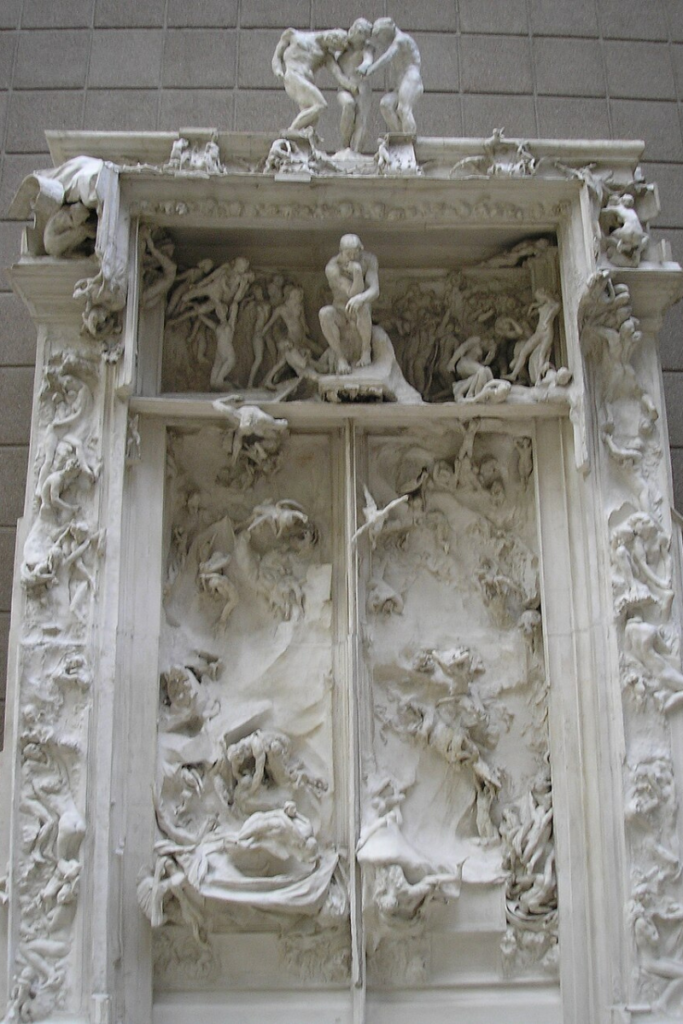
But did you know that this figure, The Thinker, first appeared in a different work by Rodin? The Thinker was originally the Poet, inspired by Dante’s Inferno. The Poet, perhaps representing Dante himself, sat perched on the lintel of a massive set of doors, pondering the fate of the writhing figures below. The doors, named The Gates of Hell, contained vivid depictions of souls suffering in the circles of hell. As Rodin crafted the doors, he often considered Dante’s warning over the entrance to the Inferno, “Abandon every hope, who enter here.”
Attribution, https://commons.wikimedia.org/w/index.php?curid=1517485
Flesh vs. Spirit
Interestingly, The Thinker is a symbol of enlightenment, but given its history, perhaps he’s thinking less about human greatness and more about his end. Instead of pondering the mysteries of the universe, as some have speculated, maybe he’s considering something far more frightening—the things Scripture reveals about death and judgment.
Surely, Rodin was thinking more about Dante than about Paul when he created this work, but the scene conveys another biblical truth found in Romans 8:5-8—the mind set on the flesh leads to death.
Paul writes,
“For those who live according to the flesh set their minds on the things of the flesh, but those who live according to the Spirit set their minds on the things of the Spirit. 6 For to set the mind on the flesh is death, but to set the mind on the Spirit is life and peace. 7 For the mind that is set on the flesh is hostile to God, for it does not submit to God’s law; indeed, it cannot. 8 Those who are in the flesh cannot please God.
Romans 8:5-8
Scripture repeatedly shows that what we think shapes our lives (Prov. 4:23, Rom. 12:2, Col. 3:2, Phil. 4:8), and Romans 8:6 states it explicitly: “For to set the mind on the flesh is death, but to set the mind on the Spirit is life and peace.” Although we think millions of thoughts in our lifetimes, there are only two categories of thinkers.
God’s Word says we are either people who set our minds on the flesh or the Spirit. One orientation leads to death, and the other leads to life and peace.
Death vs. Life
To set the mind on the Spirit is not a command to think good thoughts or be more positive. Our goal is not merely to adopt a more positive attitude so that we’ll experience more life and peace. Rather, Romans 8 shows that if we are in Christ, our lives have an entirely new operating system. We’re no longer living according to the flesh, doing all the things we once wanted, and that inevitably led to death. Instead, we live in accordance with the Spirit, which produces life and peace. Our new way of life in the Spirit affects everything—even what we set our minds on.
How radical is this shift from the flesh to the Spirit? Perhaps we’re unaware of just how much we opposed God before we came to Christ. Even if we were moral and did good deeds, our minds and wills opposed God, so we didn’t (and couldn’t) fulfill the Law and were hostile to God. Our fleshly nature cared only about satisfying ourselves. So it’s no exaggeration to say that a mind no longer ruled by the flesh, and ruled by the Spirit, is a life transferred from death to life.
Hope vs. Despair
Like the Poet who sits on the precipice of eternity, if you’re reading this, you’ve been afforded more time to ponder these truths. Romans 8 poses the question we can’t ignore: Is my mind set on the things of the flesh that lead to death, or on the Spirit who gives life and peace?
To answer this question, we must turn back to Romans 8:1, which declares our new identity and hope: “There is therefore now no condemnation for those who are in Christ Jesus” (1). If we are in Christ, we don’t fear hell and judgment. Christ has set us free from the law of sin and death—accomplishing for us what we could never do for ourselves.
Dante’s entrance to the Inferno stated, “Abandon every hope, who enter here.” Those who cross that threshold have indeed lost all hope. But did you know there’s another way, and another gate? Jesus said it is narrow, and few find it, but it leads to life (Matt. 7:13-14). Our hope is sure because of what Jesus Christ has done, and one day, we’ll enter through those pearly gates and forever be with the Lord.
So friend, don’t just ask what the Thinker is thinking—ask what your own mind is set on. Consider the Poet, and consider eternity. The mind set on the flesh is death, but the mind set on the Spirit is life and peace. Put your hope in Christ, and you’ll never be ashamed.
Cara
This is the third post in our Romans 8 study. To review, read Romans 8:1-2 and Romans 8:3-4.
P.S. Do you want to memorize Romans 8 with me? Download these Scripture memory cards to aid your study.