
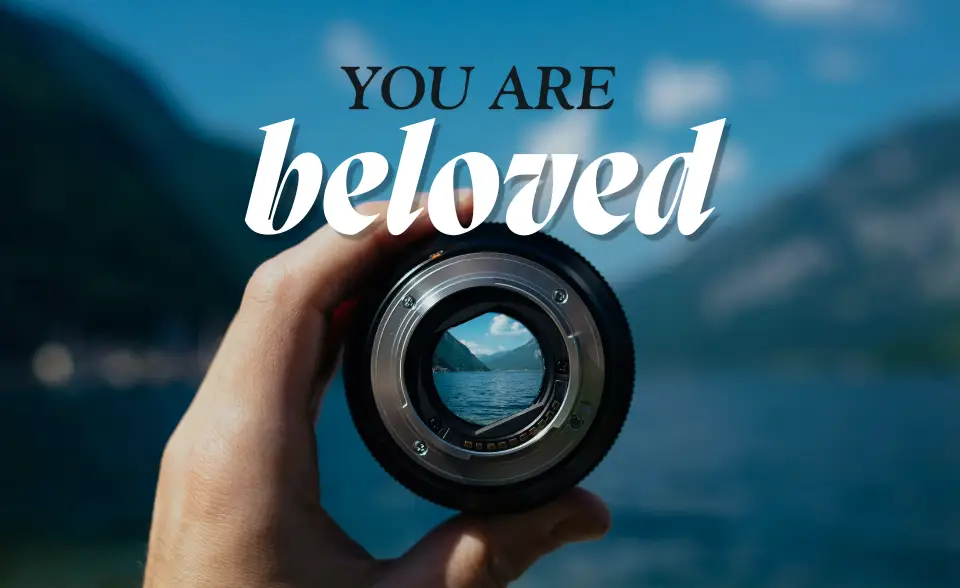
Have you ever put on new glasses and realized how accustomed you’ve grown to blurry words and faces? That first look with a new prescription is eye-opening in more ways than one. As the world comes into high definition, you might wonder how you settled for less for so long. You adapted to poorer vision, and it felt normal. But now that your sight has been restored or improved, you never want to go back. If you knew then what you know now, you would’ve acted sooner.
This might make us wonder: have I adapted to a kind of spiritual nearsightedness when clearer vision is offered?
Nearsightedness means you can see what’s right in front of you, but everything in the distance is out of focus. In a spiritual sense, it means you attend to immediate needs while losing sight of what’s ultimate.
It’s easy to slip into spiritual nearsightedness in our quiet times. Life is busy, distractions pull at us, and we drift into bad habits. Our privileged practice of communing with God can begin to feel like a chore rather than a delight. We hurry through our daily reading and prayers, and check the box that we did it. We move on, unaffected and unchanged.
Behold
In times like these, our spiritual vision needs renewal, and God’s Word is the prescription. The very thing we struggle to enjoy provides the cure. In 1 John 3:1, the Apostle John encourages us to lean in and look more intently at who God is. He says, “See what kind of love the Father has given to us, that we should be called children of God, and so we are.” Some versions translate “see” as “behold.” John is telling us to stop here and behold what it means to be a child of God!
This truth may be so familiar that it no longer moves you, and you pass by with hardly a glance. But remember the first time you beheld the Grand Canyon, El Cap, or some other natural wonder? It took your breath away, and you wanted to stay there until you had fully soaked it in. Even if you’ve seen the wonder of your status as a child of God before, stop and look at it again. Consider the foreign kind of love that it took for the Father and the Son to make you their own.
John wants this wonder of our relationship as God’s children to move from head to heart. He wants us to behold and then to know that we are beloved.
Beloved
The next verse takes the beholding of verse 1 to the next level. We see the wonder of being God’s children, and discover we are beloved children with a glorious future. He writes, “Beloved, we are God’s children now, and what we will be has not yet appeared; but we know that when he appears we shall be like him, because we shall see him as he is” (2).
Your status as a child of God means that you are beloved. You are not God’s employee, or a nameless guest at his table, but his precious son or daughter, and he knows and loves you! As his beloved child, you receive all the privileges of belonging to his family. Our identity as his children changes us now, but someday, we will bear the full family resemblance and look just like Jesus.
Imagine what your physical and spiritual eyes will behold. You will be raised like Jesus, and your perishable body made imperishable. (1 Cor 15:43). Your sinful nature will be transformed like his sinless one, without becoming like him in deity, and your faith will be made sight! Finally and forever, you will see him, know him, and be like him!
Become
How do we respond to such glorious truths? Verse 3 tells us that we purify ourselves. “And everyone who thus hopes in him purifies himself as he is pure” (1 John 3:3). This means that even though we know we’ll one day look and be like him, we want to become more like him now. We aren’t sinless, but we desire to sin less.
So, if you’re in Christ, are you becoming what you are beholding? Are your eyes fixed on Jesus and his Word? When our spiritual vision is blurry, our hearts can grow dull, and we realize we don’t desire him as we should.
In his sermon, The Weight of Glory, C.S. Lewis observes, “The unblushing promises of reward” in the gospel aren’t meant to restrain our desires but to awaken them. The problem isn’t that our desires are too strong, but too weak.
“We are half-hearted creatures, fooling about with drink and sex and ambition when infinite joy is offered us, like an ignorant child who wants to go on making mud pies in a slum because he cannot imagine what is meant by the offer of a holiday at the sea. We are far too easily pleased.”
Mud Pies to Sand Castles
Have you been making mud pies in the slum when you could be making sand castles on the beach? Your daily time in the Word and in prayer shouldn’t be a box you check, but the leisurely seaside retreat Lewis speaks of. As you behold the truths of God’s Word and commune with him in prayer, something strange and wonderful happens. The familiar truths you once passed by take on more color, texture, and vibrancy, like the changing colors in the Grand Canyon.
John invites us to slow down, look, and linger. As you do, your soul rests and experiences holy leisure. To pursue holy leisure is to take an unhurried approach to knowing and enjoying Jesus through the Word of God and prayer. It provides a kind of spiritual clarity that you’ve been missing—allowing you to behold all that’s yours in Christ.
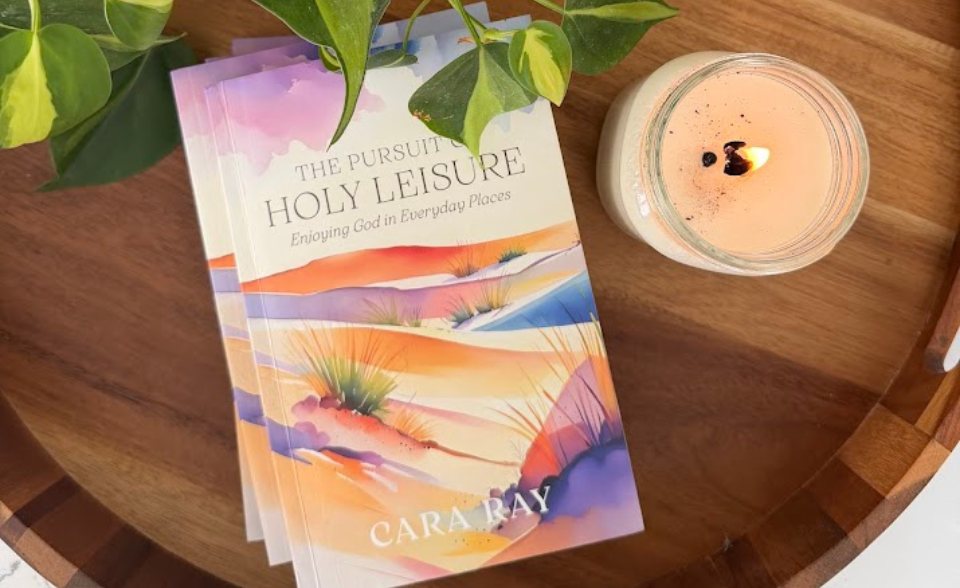
In The Pursuit of Holy Leisure: Enjoying God in Everyday Places, I explore this mindset that reframes our time in God’s Word and prayer not as a duty but as a delight. If you’ve settled for less than 20/20 vision of your glorious identity and inheritance as a child of God, I invite you to pull up a chair and join me. Grab a copy of my book, open your Bible, and fix your sights on Jesus.
Behold him, and find him the holy leisure of your soul!
Cara
P.S. To learn more about The Pursuit of Holy Leisure, click the image below.
Related Posts
- The Pursuit of Holy Leisure: Enjoying God in Everyday Places: Now Available
- 50 Years of Becoming and Beholding
- How to Live a Life of Holy Leisure, Even When Your Life’s Not Leisurely
- Holy Leisure is for Everyday People
- The Window of Your Heart: How You Approach God’s Word
P.P.S. If you’re curious about holy leisure, I invite you to download this free resource.